
A foreclosure sale can sound like the final chapter—but understanding what actually happens before, during, and after the sale can help you feel more prepared and make better decisions. Whether you’re facing foreclosure yourself, helping someone you care about, or simply trying to understand the process, knowing what to expect can replace uncertainty with clarity.
In this guide, we’ll walk through what happens when a home is scheduled for a foreclosure sale, who may bid on the property, what happens if the lender takes ownership, and why the final sale price may matter to the homeowner. The more you understand about the process, the better equipped you’ll be to ask questions, explore your options, and protect your financial interests.
What most homeowners don’t realize is that foreclosure doesn’t always mean the end—you may still have options, even later in the process.
While each state and locality has their own rules, here you'll find the basic process, the steps your lender will take to recover the funds that have become delinquent if you're behind on your loan payments.
Read all the way through an watch the video to arm yourself with information that will help you best navigate the process and come out on the other side with a constructive path forward.
If You're Missing Payments (or Fear You Might Soon)
If you've missed a number of payments (usually around 120 days past due) on your home mortgage or property taxes, a taxing authority, bank or mortgage lender will issue a notice of default with the court.
This notice is a legal action that starts the process of foreclosure, ending in the sale of the property if the homeowner doesn't remedy the missed payments.
The goal of a mortgage foreclosure sale is to recover the outstanding loan balance after the borrower (homeowner) defaults on payments.
The mortgage foreclosure sale (typically referred to a sheriff sale) is part of that recovery process.
This article is about arming you with knowledge if you're facing this process and possible options that might be available.
Watch the Video: Navigating Pre-Foreclosure
Forging Ahead During a Stressful Situation
Facing the possibility of losing a home can be one of the most stressful and confusing experiences a homeowner can experience.
Notices arrive, deadlines approach, and it can feel like decisions are being made without a clear understanding of your options or next steps.
For many homeowners, the foreclosure process doesn’t begin in a courtroom or at an auction. It begins quietly… with a letter.
It can also begin in the following ways with receipt of one or more of the following items:
- A notice taped to a door.
- A certified envelope in the mailbox.
- Or receipt of a legal document that says “Notice of Default.”
You May Feel a Range of Emotions
At first, the words can feel almost unreal.
You may read it once.
Then again.
Your heart starts racing as the reality begins to settle in — your home may be at risk.
In that moment, it’s common to feel a wave of emotions all at once:
- Fear about what might happen next
- Overwhelm trying to understand complicated legal language
- Confusion about deadlines, court filings, and auctions
- Even shame, wondering how things reached this point
For many people, foreclosure can feel isolating and even embarrassing. It can seem like everyone else understands the process except you.
And the truth is, most homeowners have never been taught how the foreclosure process actually works. So naturally there are questions and confusion if it becomes reality. Questions like:
- What happens after a notice of default?
- How does a property end up scheduled for auction?
- What steps occur before the sale ever takes place?
Unfortunately, these questions are rarely explained in plain language at the time when homeowners need clarity the most.
And when fear and uncertainty take over, it becomes even harder to sort through the information.
That’s why understanding what happens before and during a foreclosure auction can make a stressful situation a little easier.
Knowing the process won’t change the past — but it can help you understand what’s happening and what steps may still lie ahead.
We’ll walk through the foreclosure process in simple terms so you can better understand what happens from the moment a notice is issued all the way to the day a property is sold at auction.

What Is a Mortgage Foreclosure?
A mortgage foreclosure is the legal process where a lender seizes and sells a borrower's property to recover the outstanding loan balance after the borrower defaults on payments.
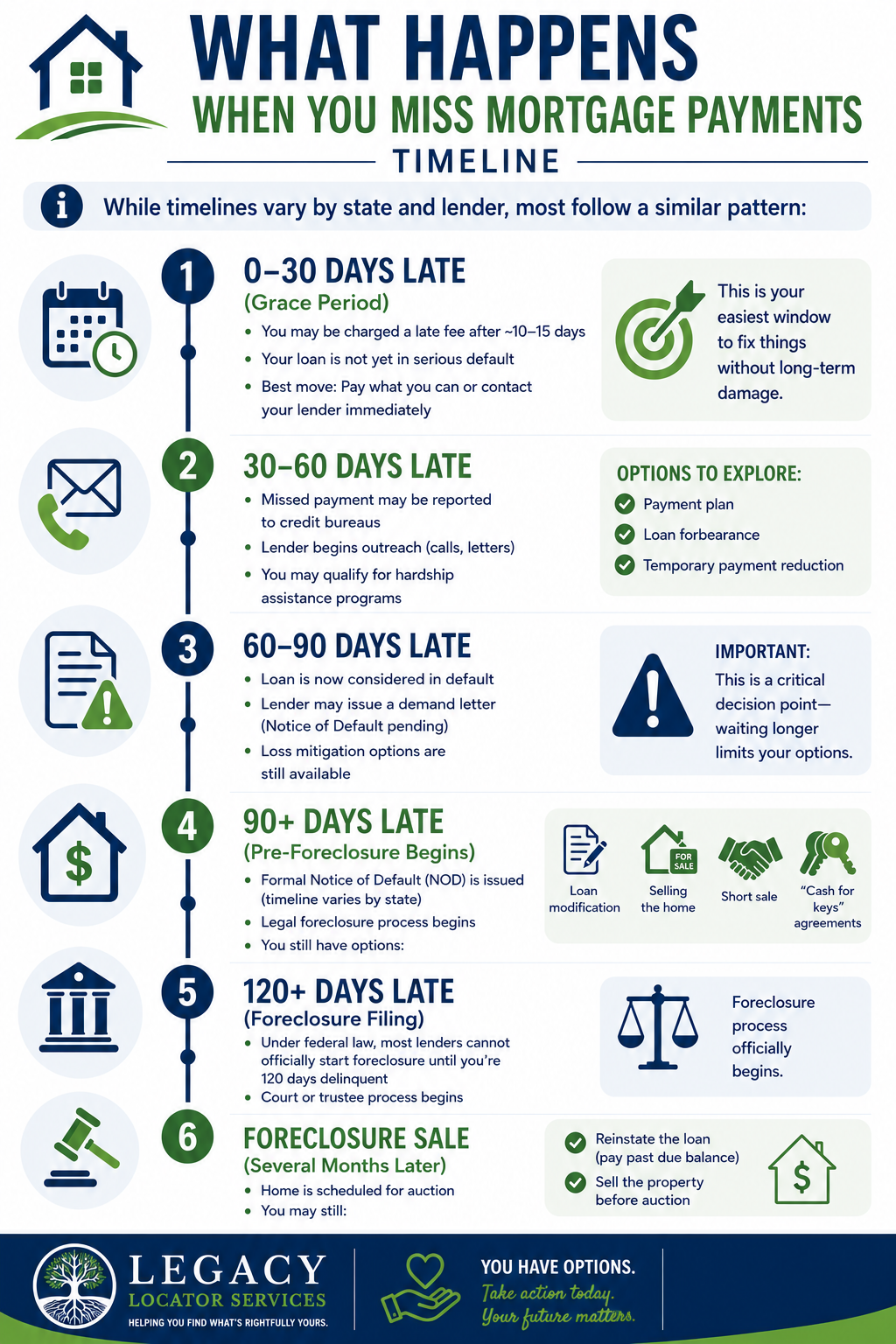
Every jurisdiction has different timelines. The timelines shown here are estimates only. For details contact your lender or an attorney.
What Happens Before the Foreclosure Sale?
When a homeowner falls behind on their mortgage payments and the issue isn’t resolved, the lender may move forward with a mortgage foreclosure sale.
It's important to note that before a mortgage foreclosure sale can happen, several things will have occurred:
1. Missed Payments
The homeowner falls behind on mortgage payments, usually for several months.
2. Notice of Default
The lender files a legal notice stating the loan is in default. This is often recorded publicly.
3. Right to Cure (Redemption Period)
In many states, the homeowner is given time to:
- Pay the past-due amount
- Negotiate with the lender
- Consult an attorney
- Sell the property
- Apply for loss-mitigation options
The mortgage foreclosure sale (sheriff's sale) is the final step in the foreclosure process—and it’s where the property is sold to recover the unpaid loan balance. If no resolution is reached with the homeowner (borrower), the sale is scheduled.
What Happens During the Sheriff Sale?
If you’ve ever wondered what actually happens during a foreclosure sale, who can attend, or what it means for the homeowner, read on while we break it down step by step.
A mortgage foreclosure sale is a public auction where a property is sold after the borrower defaults on their mortgage.
The goal is to repay the lender for the outstanding loan balance, fees, and legal costs.
Foreclosure sales typically take place:
At a county courthouse
On the courthouse steps
Online via a government-approved auction platform
The exact foreclosure auction process varies by state, but the core steps are similar nationwide.
What Happens During a Mortgage Foreclosure Sale?
legacylocatorservices.com
What Happens on the Day of the Foreclosure Sale?
This is what happens on the day of a mortgage foreclosure sale. If your home is scheduled for a foreclosure auction, here’s how foreclosure sales typically unfold:
The Sale Is Public
Anyone can attend—investors, buyers, or members of the public.
Bidding Begins
- The lender usually starts with a credit bid equal to what is owed.
- Bidders compete by offering higher amounts.
- Bids are often cash or cashier’s check only.
The Highest Bid Wins
The property goes to the highest qualified bidder, subject to state rules.
What If No One Bids on the Property?
If there are no outside bidders, the lender typically takes ownership of the property. At this point, it becomes bank-owned or REO (Real Estate Owned).
REO properties are often:
Listed with a real estate agent
Sold on the open market later
Priced differently than foreclosure auctions

What Happens After the Sale?
Once the sale is complete:
- Ownership of the property transfers to the winning bidder
- The homeowner no longer owns the property
- Many eviction proceedings begin even if the home is still occupied
Additionally foreclosure is not eviction. The winning bidder has an additional task in many cases after the sale. That task involves getting the previous homeowner out of the house. This may involve additional time and eviction related costs.
Some states allow a post-sale redemption period, giving the former owner a short window to reclaim the property by paying the full sale price plus costs—but this is state-specific.
Who Buys Properties at Foreclosure Sales?
Common buyers include:
Real estate investors
Property developers
Landlords
Occasionally, owner-occupants
Because foreclosure sales are often as-is, buyers typically do extensive research before bidding.
Why Understanding Foreclosure Sales Matters
Whether you’re a homeowner, heir, investor, or simply researching your options, understanding mortgage foreclosure sales can help you:
- Understand your rights and timelines
- Avoid last-minute surprises
- Identify potential financial outcomes
- Understand where ownership changes hands
Foreclosure is a legal process—but knowledge gives you leverage.
Wrapping It Up
A mortgage foreclosure sale is more than an auction—it’s the legal turning point where property ownership officially changes.
While the process can feel overwhelming, understanding what happens before, during, and after the sale puts you in a stronger position to make informed decisions.
If you're currently facing the foreclosure process, or you or someone you know has - recently experienced a foreclosure sale, it’s completely normal to have questions about what happens next.
The process can be confusing, and important details are not always clearly explained. Taking time to understand these steps can help you move forward with more clarity.
We also have a number of tools available in our Resource Center designed to help you organize your information and start a productive conversation with your lender to obtain information that helps with next steps. You can also use the information in the box below to download our free guide for homeowners navigating this process.
Facing Foreclosure?
Discover Options You May Not Be Aware Of...
If you’ve gone through the foreclosure process and you'd like to know if you have remaining options — download our free guide. Even if you've been notified that your home is going to be sold in the future, there are still things to consider that we may be able to help you with.